
7-Day Skin Barrier Reset Plan (Dermatologist-Style Routine That Actually Works)
A damaged skin barrier doesn't just feel dry — it becomes reactive, unpredictable, and harder to manage. You may notice stinging, breakouts, tightness, or sudden sensitivity to products that used to work. This happens when your skin's protective layer is weakened, allowing moisture to escape and irritants to enter.
A damaged skin barrier often leads to increased transepidermal water loss (TEWL), making skin feel dry, tight, and more reactive — especially in cold, low-humidity climates like Canada where environmental stress accelerates barrier breakdown.
This 7-day skin barrier reset plan simplifies everything. Instead of adding more products, it removes what's causing stress and focuses on rebuilding your barrier using proven ingredients like ceramides and soothing hydrators. Dermatology research shows that restoring the skin barrier reduces irritation and improves hydration levels when done correctly.
If you've been looking for a simple, structured way to repair your skin barrier, this routine gives you a clear, dermatologist-style path forward.
Quick Summary
A 7-day skin barrier reset plan helps repair a damaged or compromised skin barrier by eliminating irritation and focusing on hydration, ceramides, and gentle skincare. This routine is ideal for sensitive, dry, or over-exfoliated skin and typically shows visible improvement within 3 to 7 days — especially in dry climates like Canada where skin barrier damage is more common.
Jump to a section
What is a skin barrier reset
Signs your barrier is damaged
Who this reset is for
The 3 phases of repair
The 7-day routine
Key ingredients
Common mistakes
When NOT to reset
Reintroducing actives
How long repair takes
Post-reset routine
Final thoughts
Quick routine summary
7-Day Skin Barrier Reset Plan (Dermatologist-Style Routine That Actually Works)
If your skin suddenly burns, feels tight, or reacts to everything — this is your reset plan.
What Is a Skin Barrier Reset (and Why It Works)
A skin barrier reset is a short-term routine designed to reduce irritation and allow your skin to repair itself naturally.
Your skin barrier plays a critical role in preventing water loss and protecting against environmental stressors. When it's compromised, your skin becomes more sensitive, dehydrated, and prone to irritation. Dermatology research supports the importance of restoring this function for overall skin health, as outlined by the Cleveland Clinic.
Instead of adding more actives, a reset works by simplifying your routine and focusing only on what supports repair.
If you want to understand the full mechanism behind barrier repair, read our dermatologist-style guide to skin barrier repair.
Signs You Need a 7-Day Skin Barrier Reset
Your skin usually gives clear signals when the barrier is compromised:
- Persistent tightness even after moisturizing
- Burning or stinging when applying products
- Flaky patches with unexpected breakouts
- Sudden sensitivity to everything
- Skin that looks thin, shiny, or irritated
These symptoms are commonly linked to increased water loss and barrier dysfunction. For a full breakdown, read our guide on the signs of a damaged skin barrier.
Who This Reset Is For (and Who Should Avoid It)
This reset works best if:
- You've overused exfoliants, acids, or retinol
- Your skin feels inflamed, reactive, or unstable
- You want a simple routine that restores balance
- You experience dry, tight skin during dry Canadian winters
You may need to modify this if:
- You're using prescription treatments
- You're under dermatological care
In those cases, this reset can support recovery but shouldn't replace professional guidance.
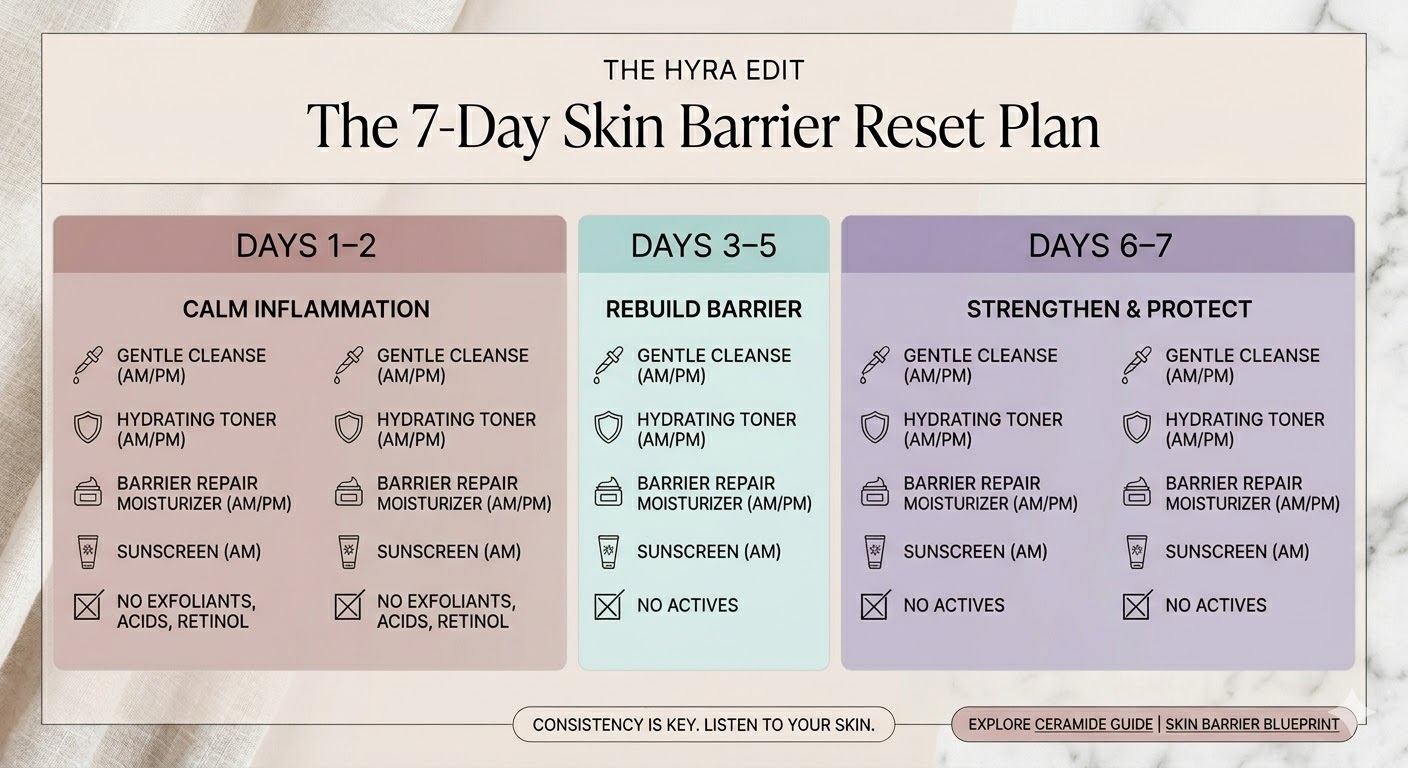
The 3 Phases of Barrier Repair (Why 7 Days Works)
Barrier repair follows a predictable pattern:
- Phase 1 (Days 1–2): Calm inflammation
- Phase 2 (Days 3–5): Rebuild the barrier
- Phase 3 (Days 6–7): Strengthen and protect
Consistent use of barrier-supporting ingredients like ceramides has been shown to improve hydration and reduce sensitivity, according to research indexed by the National Institutes of Health.
Calm Phase (Days 1–2: Repair a Damaged Skin Barrier)
Reduce redness, stinging, and tightness while giving your skin a break from irritation. During these first two days, your skin may still feel dry or sensitive — this is normal as it begins repairing.
Rebuild Phase (Days 3–5: Hydrate and Strengthen Your Skin Barrier)
Restore hydration levels and begin strengthening your skin barrier with supportive ingredients. At this stage, your skin should start feeling less tight, more hydrated, and visibly calmer.
Strengthen Phase (Days 6–7: Protect and Maintain Your Skin Barrier)
Lock in moisture and improve resilience so your skin can tolerate actives again in the future.
Follow this exact routine for the next 7 days:

The 7-Day Skin Barrier Reset Routine
Keep it simple — this is where most people go wrong.
Morning (All 7 Days)
- Gentle cleanse (or rinse if very dry)
- Hydrating toner
- Moisturizer
- Sunscreen
Night (All 7 Days)
- Gentle cleanse
- Hydrating toner
- Moisturizer
No exfoliants. No acids. No retinol. No experimenting.
Key Ingredients That Accelerate Barrier Repair
Focus on ingredients that rebuild, not stimulate:
- Ceramides help restore the skin's lipid structure
- Panthenol supports hydration and reduces irritation
- Niacinamide strengthens the barrier
- Cica calms inflammation
For a deeper breakdown, read our ceramide guide for skin barrier repair.
Common Mistakes That Slow Down Healing
Most people delay their progress without realizing it:
- Switching products too often
- Using exfoliants during recovery
- Over-cleansing
- Layering too many products
- Restarting actives too early
Barrier repair depends more on consistency than intensity. This is especially true in northern U.S. and Canada environments where cold air and low humidity accelerate moisture loss.
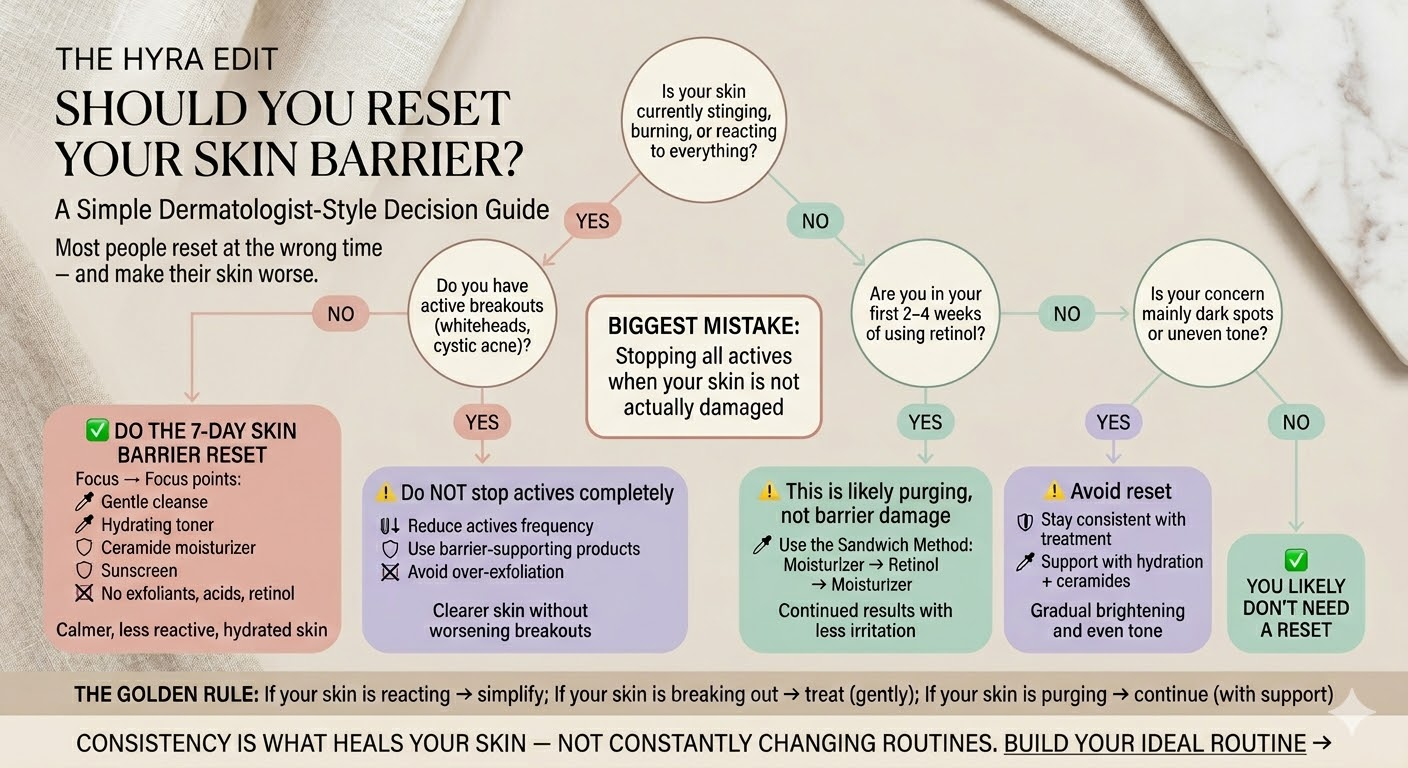
When NOT to Do a Skin Barrier Reset
A skin barrier reset plan can be powerful, but it's not always the right approach for every skin concern.
You should avoid doing a full reset if:
- You are actively treating acne with prescription or medical-grade products
- You are experiencing purging rather than true irritation
- Your routine is designed for ongoing conditions like acne, rosacea, or hyperpigmentation
Verywell Health notes that distinguishing between purging and true barrier damage is one of the most common points of confusion in skincare recovery.
In these cases, removing all active ingredients may disrupt progress instead of helping your skin barrier recover.
If you're unsure whether your skin barrier is damaged or just reacting, read our guide on the signs of a damaged skin barrier.
When (and How) to Reintroduce Actives
Once your skin feels stable again:
- Start actives slowly (1–2 times weekly)
- Use a buffer method if needed
- Avoid combining strong ingredients
This is especially important with retinol.
How Long Does Barrier Repair Actually Take?
While this plan helps reset your skin in 7 days, full recovery may take longer depending on severity.
For a realistic timeline, see How Long Does It Take to Repair Your Skin Barrier.
A Simple Barrier-Support Routine (After the Reset)
Once your skin stabilizes, keep your routine consistent:
- Cleanser
- Hydrating toner
- Moisturizer
- Sunscreen
Dermatologists consistently emphasize restoring hydration and lipids rather than increasing complexity.
Final Thoughts
A damaged skin barrier doesn't need more products — it needs the right conditions to recover.
This reset works because it removes the guesswork and gives your skin a structured path to heal.
If your skin barrier is damaged, consistency matters more than complexity. Using a simple, ceramide-focused routine can help accelerate repair while reducing irritation. A pre-built barrier-support routine can also remove guesswork during your reset. Explore the Soothing Barrier Rescue Pack →
Quick Routine Summary
Morning
- Gentle cleanse
- Hydrating toner
- Moisturizer
- Sunscreen
Night
- Gentle cleanse
- Hydrating toner
- Moisturizer
- Avoid actives for 7 days
- Focus on hydration and barrier repair
- Reintroduce actives slowly
Frequently Asked Questions
Can you repair your skin barrier in 7 days?
You can significantly improve your skin barrier in 7 days by removing irritants and focusing on hydration and barrier-repair ingredients. However, full recovery may take longer depending on the severity of damage.
What should you avoid during a skin barrier reset?
Avoid exfoliants, acids, retinol, and harsh cleansers during a reset. These can worsen irritation and delay healing. Focus on gentle cleansing, hydration, and barrier-supporting ingredients.
How do you know if your skin barrier is healing?
Signs of healing include reduced redness, less stinging, improved hydration, and smoother texture. Skin becomes more stable and less reactive over time.
Can I use niacinamide during a skin barrier reset?
Yes, niacinamide can support barrier repair when used at moderate concentrations. It helps strengthen the skin and improve resilience without causing irritation.
When can I start using retinol again after a skin barrier reset?
You can reintroduce retinol once your skin barrier feels fully repaired, typically after 7 to 14 days. Start with a low concentration and apply it only once or twice per week to avoid re-damaging your skin barrier. Pairing retinol with ceramides and hydrating ingredients can help maintain barrier health.





Leave a comment
This site is protected by hCaptcha and the hCaptcha Privacy Policy and Terms of Service apply.