
When NOT to Do a Skin Barrier Reset (And What to Do Instead)
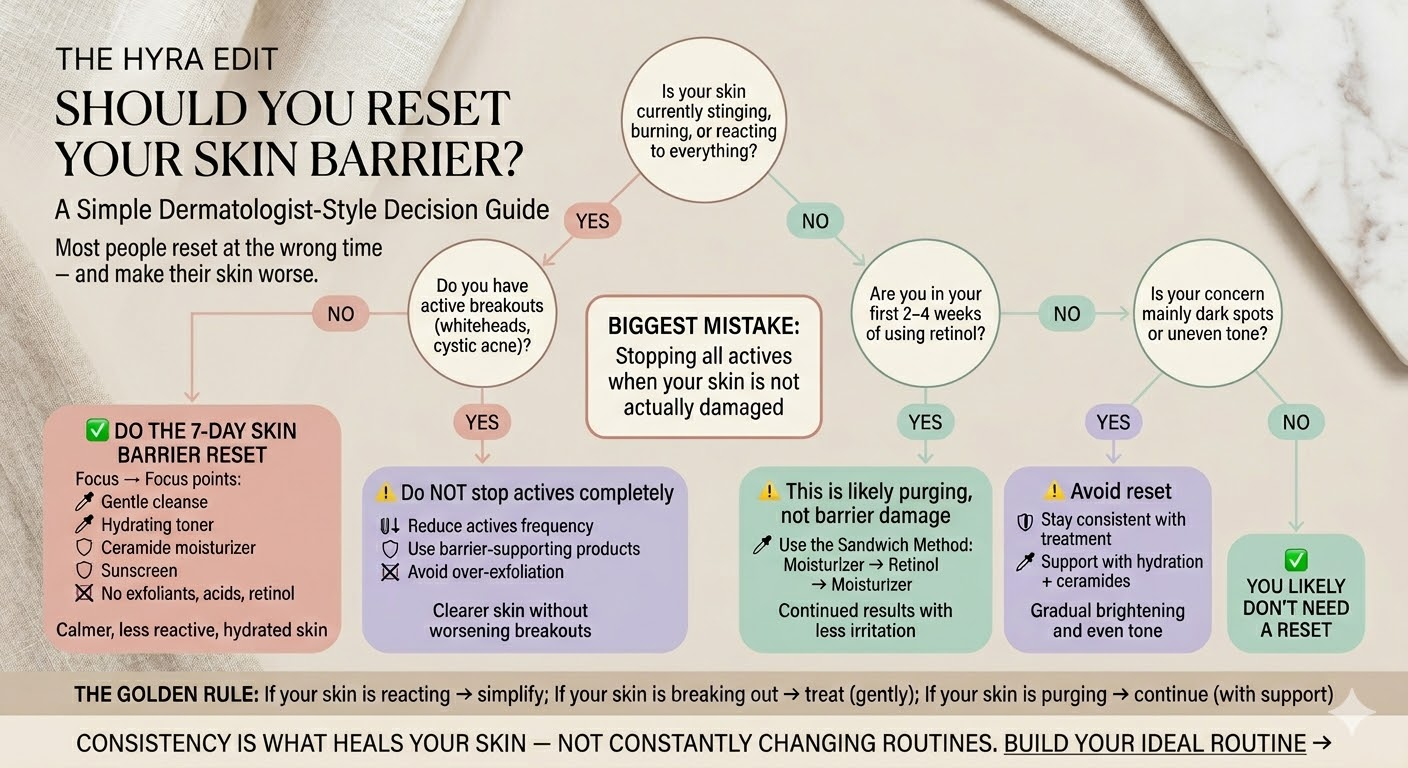
A 7-day skin barrier reset can calm irritation and help your skin recover — but it's not always the right solution.
If your skin is breaking out, purging from retinol, or dealing with long-term concerns like pigmentation, stopping all actives may actually slow your progress.
This guide explains exactly when a reset works, when it doesn't, and how to adjust your routine without damaging your results.
Jump to a section
When a Skin Barrier Reset Works
When You Should NOT Do a Reset
The Retinol Purge vs Damage Difference
The Biggest Mistake People Make
What to Do Instead (Smarter Approach)
How to Know If Your Barrier Is Actually Damaged
FAQ
When a Skin Barrier Reset Actually Works
A 7-day reset works best when your skin is reacting — not breaking out.
You may benefit from a reset if you're experiencing:
- Burning or stinging when applying products
- Sudden sensitivity to products you previously tolerated
- Tight, dry, or flaky skin
- Redness without active acne
These are classic signs of a compromised skin barrier.
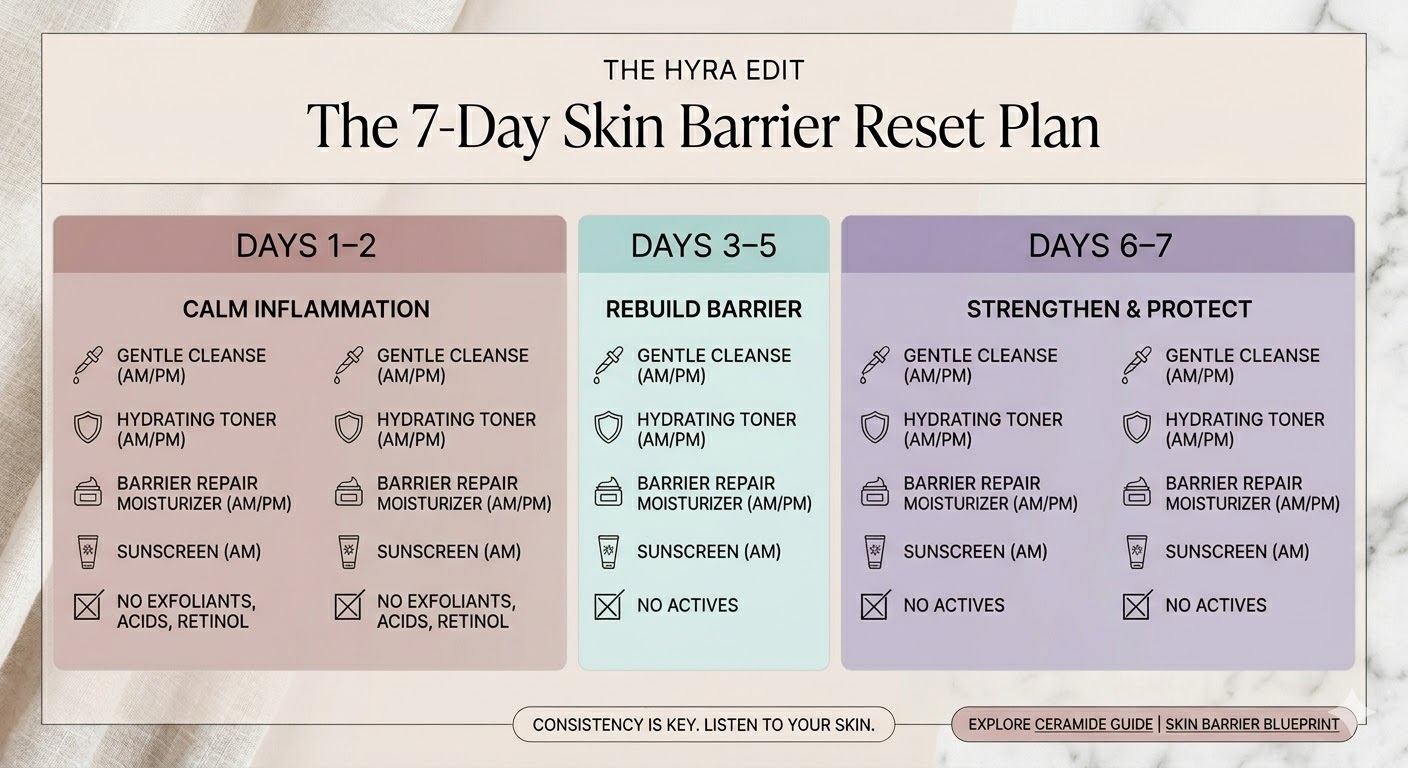
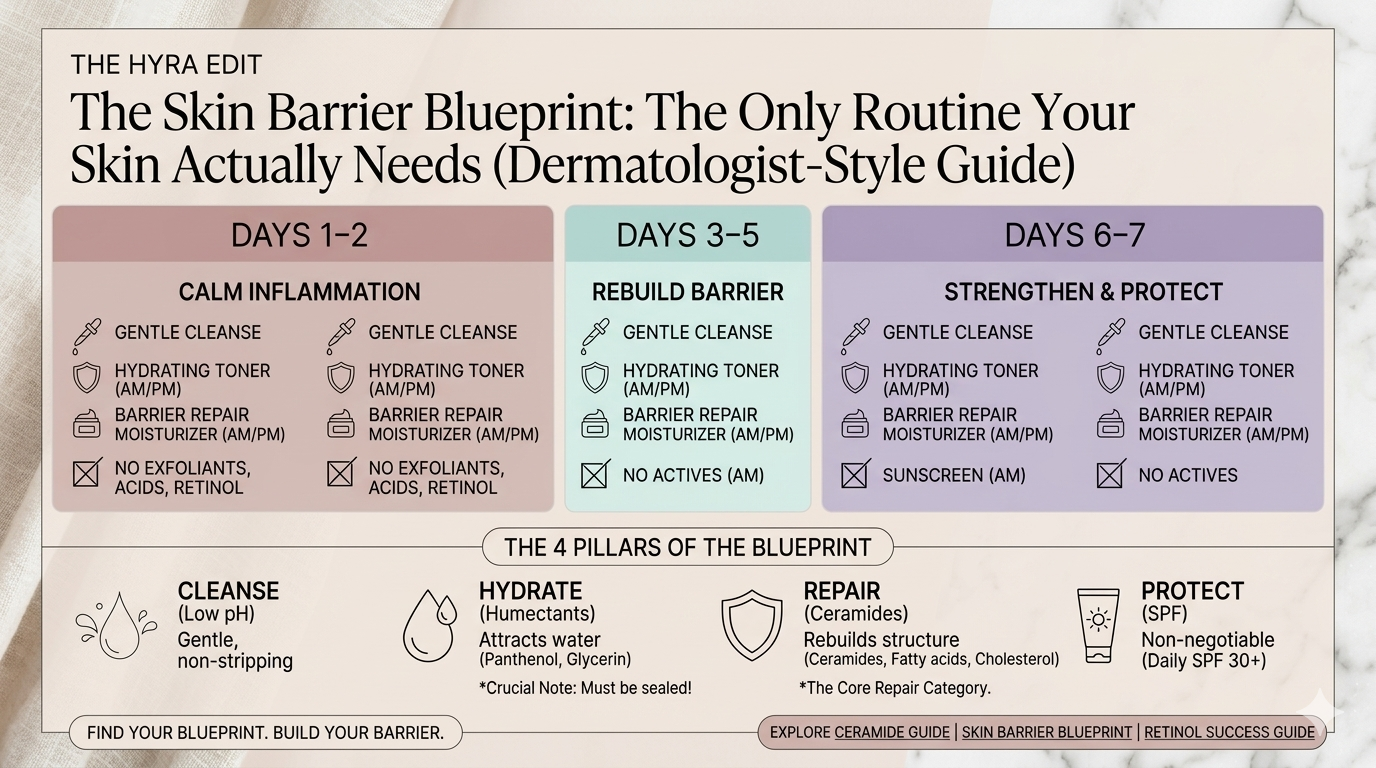
If this sounds familiar, following a structured routine like our 7-Day Skin Barrier Reset Plan can help calm inflammation and restore balance.
When You Should NOT Do a Skin Barrier Reset
This is where most people unintentionally slow their progress.
A reset is not the right approach if your skin requires ongoing treatment.
Persistent Acne
If you're dealing with clogged pores, cystic acne, or frequent breakouts, removing actives entirely can worsen congestion.
Hyperpigmentation & Dark Spots
Conditions like post-acne marks or melasma require consistency to fade — not interruption.
Chronic Skin Conditions
Skin concerns such as eczema or rosacea often require targeted care, not a simplified routine alone.
According to the American Academy of Dermatology, consistent, condition-specific treatment is essential for managing acne and related skin concerns (AAD: Acne Skin Care).
The Retinol Purge vs Damage Difference
This is one of the most misunderstood skincare moments.
If you are in the first 2–4 weeks of starting a retinol, your skin may go through a purging phase — where breakouts temporarily increase as cell turnover accelerates.
This is not the same as barrier damage.
Stopping retinol too early can reset your progress and prolong the adjustment phase.
Instead of doing a full reset, try buffering your routine using the Sandwich Method:
Moisturizer → Retinol → Moisturizer
This helps reduce irritation while maintaining results.
If your skin feels irritated but not severely damaged, supporting your barrier while continuing treatment is often the smarter approach.
The Biggest Mistake People Make
The biggest mistake is assuming all irritation equals barrier damage.
Not all reactions require stopping your routine. Sometimes your skin is:
- Adjusting to a new active
- Purging
- Reacting to one specific ingredient
Stopping everything too early can interrupt results — especially with ingredients designed to work over time.
Understanding the difference is key. Read our Signs of a Damaged Skin Barrier Repair Guide to learn more.

What to Do Instead (Smarter Approach)
Instead of completely stopping your routine, adjust it strategically.
Reduce Frequency
Use actives fewer times per week instead of daily. This is especially important during seasonal transitions — like moving into dry Canadian winters, where your skin barrier is naturally more vulnerable.
Buffer Your Routine
Apply hydrating layers before actives to reduce irritation.
Support Your Barrier
Incorporate ceramides, panthenol, and soothing ingredients while continuing essential treatments.
Research from the Cleveland Clinic emphasizes the importance of maintaining hydration and lipid balance to support skin barrier repair (Cleveland Clinic: Skin Barrier).
How to Know If Your Skin Barrier Is Actually Damaged
Before doing a reset, confirm what your skin actually needs.
A damaged barrier typically presents as:
- Increased sensitivity
- Redness and inflammation
- Rough or uneven texture
- Persistent dryness or dehydration
If you're unsure, take our Korean Skincare Quiz to get a guided routine recommendation.
The Bottom Line
A skin barrier reset is a powerful tool — but only when used at the right time.
If your skin is reacting, simplifying your routine can help restore balance. But if your concern is acne, purging, or pigmentation, consistency and targeted care will always deliver better results.
The goal isn't to do less — it's to do what your skin actually needs.
Frequently Asked Questions
Can a skin barrier reset cause breakouts?
Yes. If you stop acne treatments completely, clogged pores may worsen.
How often should you do a skin barrier reset?
Only when your skin shows clear signs of irritation — not as a regular routine.
Can I use niacinamide during a reset?
Yes. Gentle ingredients like niacinamide and panthenol are typically safe and supportive.
How long does it take to repair a skin barrier?
It can take anywhere from a few days to several weeks depending on severity. For more detail, see Allure's guide to skin barrier repair.





Leave a comment
This site is protected by hCaptcha and the hCaptcha Privacy Policy and Terms of Service apply.