
How to Repair Skin Barrier in Dry Climates (Canada-Focused Guide)
Living in a dry climate like Canada presents a unique challenge for your skin. Between cold outdoor air, indoor heating, and low humidity levels, your skin is constantly losing moisture throughout the day.
If your skin feels tight, sensitive, or irritated—even when you're using good skincare products—the issue is often not just dryness. It's a compromised skin barrier struggling to retain hydration.
In this guide, we'll break down why dry climates affect your skin barrier, how to repair the damage, and how to build a routine that actually works in environments like Calgary and other parts of Canada.
Quick Summary
- Cold weather and indoor heating increase moisture loss (TEWL)
- Dry climates weaken the skin barrier over time
- Hydration alone is not enough without barrier repair
- Ceramides and humectants are essential in low humidity
- A barrier-first routine helps prevent irritation and dryness

Table of Contents
- Why Dry Climates Damage Your Skin Barrier
- Signs Your Skin Is Affected by Dry Weather
- Common Skincare Mistakes in Cold Climates
- How to Repair Your Skin Barrier in Dry Climates
- Best Ingredients for Canadian Weather
- Ideal Routine for Dry Climate Skin
- Indoor vs Outdoor Skin Stress
- When to Avoid Actives Like Retinol
- Final Thoughts
- Quick Routine Summary
Why Dry Climates Damage Your Skin Barrier
Dry climates significantly increase transepidermal water loss (TEWL), meaning your skin loses moisture faster than it can retain it. According to Cleveland Clinic, the skin barrier plays a critical role in preventing moisture loss and protecting against environmental stressors.
In Canada, this is amplified by:
- Cold outdoor temperatures
- Low humidity levels
- Indoor heating systems
Together, these factors weaken the lipid structure of the skin barrier, making it harder for your skin to stay hydrated and protected. Research published by the NIH confirms that environmental factors like cold and low humidity directly compromise barrier function.
For a deeper understanding of how the barrier works, read our Skin Barrier Blueprint.
Over time, repeated exposure to low humidity weakens the lipid matrix of the skin, making it less effective at retaining moisture.
Signs Your Skin Is Affected by Dry Weather
- Persistent tightness after cleansing
- Increased sensitivity or redness
- Flaking or rough texture
- Products stinging unexpectedly
- Breakouts despite dry skin
These signs often indicate barrier disruption rather than simple dryness. These symptoms often overlap, which is why identifying the root cause is more important than simply adding more products.
Common Skincare Mistakes in Cold Climates
- Over-cleansing — Strips natural oils that support the barrier
- Using lightweight products only — Not enough protection in low humidity
- Skipping moisturizer — Leads to rapid water loss
- Overusing actives — Further weakens the barrier
- Ignoring indoor environment — Heating systems dry out skin continuously
How to Repair Your Skin Barrier in Dry Climates
Repairing your skin barrier requires a combination of hydration and lipid replenishment. Focus on:
- Restoring moisture levels
- Rebuilding barrier lipids
- Reducing irritation
This means simplifying your routine and prioritizing barrier-supporting ingredients over aggressive treatments. Our Ceramide Guide covers exactly which ingredients to look for and how to layer them effectively.
Best Ingredients for Canadian Weather
Humectants (Hydration)
- Glycerin
- Hyaluronic acid
- Panthenol
Barrier Lipids
- Ceramides
- Cholesterol
- Fatty acids
Soothing Ingredients
- Centella asiatica
- Allantoin
In dry climates, combining hydration with barrier repair is essential for long-term results. The American Academy of Dermatology recommends ceramide-containing moisturizers as a first-line approach for dry, compromised skin. In very dry environments, humectants work best when combined with barrier-supporting ingredients, as hydration alone may not be effectively retained in the skin.
Ideal Routine for Dry Climate Skin
For a complete step-by-step breakdown, see our Complete Routine Guide.
- Step 1 – Gentle Cleanser: Avoid stripping the skin
- Step 2 – Hydrating Layer: Apply on slightly damp skin to maximize hydration
- Step 3 – Barrier Repair: Use ceramide-rich products
- Step 4 – Moisturizer: Seal hydration and protect
- Step 5 – Sunscreen (Daytime): Protect from environmental stress
A simple, consistent routine works better than layering too many products.
Indoor vs Outdoor Skin Stress
Many people focus only on outdoor weather, but indoor heating is equally damaging.
- Indoor air is often extremely dry
- Constant exposure increases TEWL
- Skin doesn't get recovery time
Indoor heating reduces ambient humidity, which increases transepidermal water loss over time and places additional stress on the skin barrier. Using a humidifier and adjusting your skincare routine for indoor conditions can make a noticeable difference.
When to Avoid Actives Like Retinol
In dry climates, introducing strong actives too early can worsen irritation. If your skin is tight, sensitive, or reacting to products, focus on barrier repair first.
Using retinol on a compromised barrier often leads to dryness rather than results. Learn more in our Retinol Guide.
This does not mean avoiding active ingredients completely, but rather delaying their use until the skin barrier is stable enough to tolerate them effectively.
Final Thoughts
Dry climates like Canada require a different approach to skincare. Hydration alone is not enough—your skin barrier needs consistent support to function properly.
When you prioritize barrier repair, your skin becomes more resilient, less reactive, and better able to retain moisture over time.
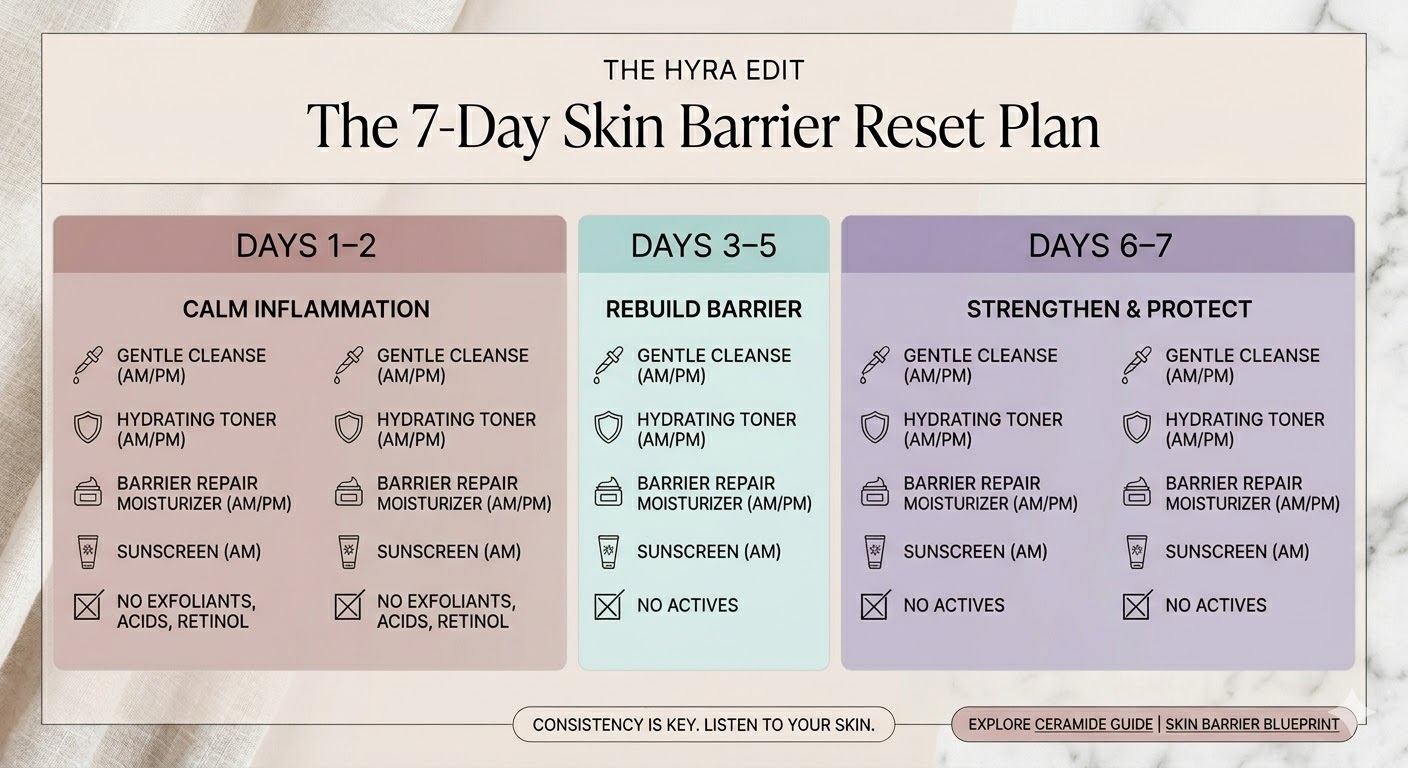
A consistent routine built around hydration and barrier repair can make a noticeable difference over time. Using a hydrating toner followed by a ceramide-based moisturizer helps support your skin's natural defense system and maintain long-term balance.
If you prefer a simplified approach, a curated routine designed for barrier repair can make consistency easier. A well-balanced set that combines hydration and barrier support helps remove the guesswork while keeping your routine effective. Explore a barrier-focused routine here.
Quick Routine Summary
- Gentle cleanser
- Hydrating toner
- Ceramide-based moisturizer
- Sunscreen (AM)





Leave a comment
This site is protected by hCaptcha and the hCaptcha Privacy Policy and Terms of Service apply.