
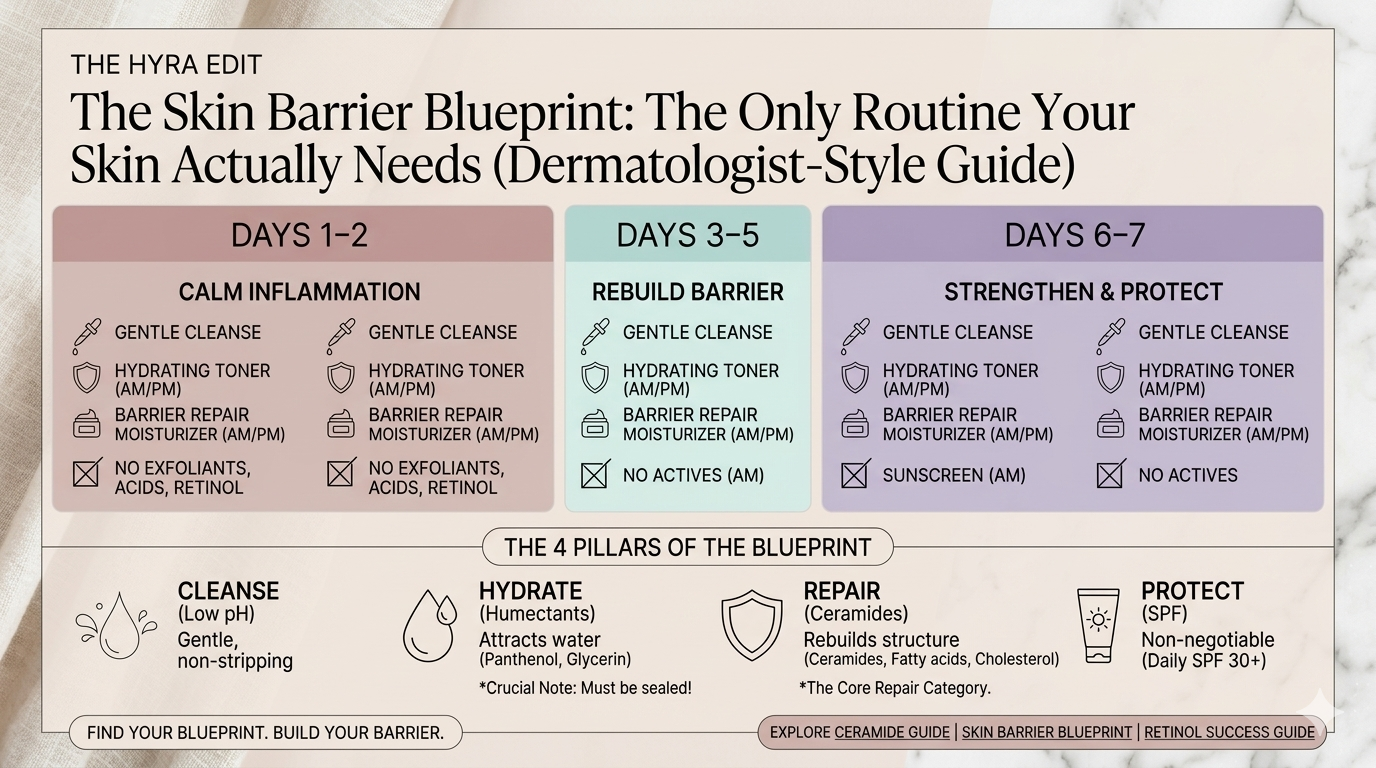
The Skin Barrier Blueprint: The Only Routine Your Skin Actually Needs (Dermatologist-Style Guide)
Quick Summary
The skin barrier blueprint is a structured skincare approach designed to repair, protect, and maintain your skin barrier using minimal, targeted products.
If your skin stings, feels tight but looks shiny, reacts to products you once tolerated, or breaks out while feeling dry, your barrier may be compromised.
A proper barrier routine focuses on:
- Gentle cleansing (low-pH, non-stripping)
- Hydration (humectants like glycerin)
- Barrier repair (ceramides, lipids)
- Protection (daily SPF)
Most people don't need more products — they need the right structure.
The longer a damaged skin barrier goes untreated, the more reactive and unpredictable your skin becomes.
If you want to understand the science behind why your barrier gets damaged in the first place, read our Complete Guide to Skin Barrier Repair.
This guide explains:
- What your skin barrier actually does
- How to identify damage early
- The exact routine to follow
- Ingredients that truly repair skin
- What to avoid during recovery
- How long healing realistically takes

What Is the Skin Barrier (And Why It Matters More Than You Think)
Your skin barrier, scientifically known as the stratum corneum, is your skin's outermost protective layer.
It functions like a biological shield — regulating what enters and leaves your skin.
Think of it like a brick wall:
- Skin cells = bricks
- Lipids (ceramides, cholesterol, fatty acids) = mortar
If you want a deeper breakdown of how this structure gets damaged and how repair actually works at a biological level, read our complete guide to skin barrier repair.
When this structure is intact, your skin:
- Retains moisture efficiently
- Resists environmental stress
- Maintains smooth texture and elasticity
A key function of the barrier is preventing Transepidermal Water Loss (TEWL), which is the passive evaporation of water from the skin.
According to the American Academy of Dermatology, disruption of this barrier leads directly to dryness, irritation, and increased sensitivity.
When the barrier is compromised:
- Water escapes rapidly
- Irritants penetrate more easily
- Inflammation increases
This is why your skin can feel:
- Dry but oily
- Tight but shiny
- Reactive but acne-prone
How to Know If Your Barrier Is Damaged
Barrier damage is often mistaken for acne, sensitivity, or purging.
But it has very specific signs:
- Your moisturizer suddenly stings or burns
- Skin feels tight immediately after cleansing
- A glossy or "plastic" appearance without true glow
- Random redness or patchy irritation
- Breakouts combined with dryness
If your skin reacts to products that used to work, your barrier is likely compromised.
👉 Read the full diagnostic guide: Signs of a Damaged Skin Barrier
Why Most Skincare Routines Fail (The Hidden Problem)
The biggest issue in modern skincare isn't lack of products.
It's overuse and poor sequencing.
Many routines include:
- Multiple active ingredients
- Frequent exfoliation
- Constant product switching
According to the Cleveland Clinic, over-cleansing and harsh skincare practices are among the most common causes of skin barrier damage.
The result is chronic irritation and long-term instability.
This is why the blueprint focuses on doing less — but doing it correctly.
The Skin Barrier Blueprint (Step-by-Step Routine)
This routine is intentionally simple.
Because damaged skin cannot tolerate complexity.
Step 1: Cleanse (Without Stripping)
Your cleanser should remove impurities — not your skin's protective lipids.
Look for:
- Low-pH formulas (around 5–6)
- Gentle, non-stripping textures
Your skin naturally sits at a slightly acidic pH (around 4.7–5.5), known as the acid mantle. This helps maintain healthy bacteria and protects your barrier.
Using high-pH cleansers disrupts this balance and dissolves essential lipids — which is why that "squeaky clean" feeling is actually a sign of damage.
If you wear sunscreen or makeup:
- Start with a cleansing balm
- Follow with a gentle cleanser
Step 2: Hydrate (Reintroduce Water First)
Hydration restores comfort and flexibility.
Key ingredients:
- Glycerin
- Hyaluronic acid
- Panthenol
These attract water into the skin — but here's what most people miss:
Hydration must be sealed, or it evaporates.
In dry climates like Canadian winters, applying hyaluronic acid without a cream on top can actually pull water out of your skin into the air, making dehydration worse.
Step 3: Repair (Rebuild the Barrier Structure)
This is where everything comes together.
Hydration fills your skin with water. Repair locks that water in.
Without this step, your skin cannot retain moisture.
Barrier repair depends on:
- Ceramides
- Fatty acids
- Cholesterol
These rebuild the structure of your skin. Research published by the National Institutes of Health confirms that ceramides are essential for maintaining skin barrier integrity and reducing TEWL.
👉 Learn more about ceramides: How to Repair a Damaged Skin Barrier: Complete Ceramide Guide
🛡️ Ready to rebuild your barrier?
The Soothing Barrier Rescue Pack is formulated with the exact ceramides, fatty acids, and humectants your skin needs at this stage.
Shop the Barrier Rescue Pack →
Step 4: Protect (Daily SPF Is Non-Negotiable)
UV exposure slows barrier recovery and increases inflammation.
Daily sunscreen:
- Protects healing skin
- Prevents further damage
- Maintains results
Even Allure notes that over-focusing on barrier repair products can backfire — consistency and simplicity matter more than layering more products.
Optional Step: Treatment (Only When Stable)
Actives like retinol should only be used once your barrier is stable.
👉 Read before introducing retinol: Why Your Skin Barrier Determines Retinol Success
Ingredient Strategy (What Actually Repairs Skin)
Barrier repair is not about trends — it's about structure.
Humectants (Hydration Layer)
Glycerin, hyaluronic acid
Lipids (Structural Repair)
Ceramides, fatty acids, cholesterol
Soothing Agents
Centella asiatica, panthenol, green tea
What to Avoid During Barrier Repair
Avoid:
- Over-exfoliation
- High-strength actives
- Fragrance-heavy products
- Constant routine switching
Consistency is what allows your skin to heal.
How Long Barrier Repair Takes
Typical recovery timeline:
- Mild damage: 1–2 weeks
- Moderate damage: 3–6 weeks
- Severe damage: 6–8+ weeks
📅 Not sure where to start?
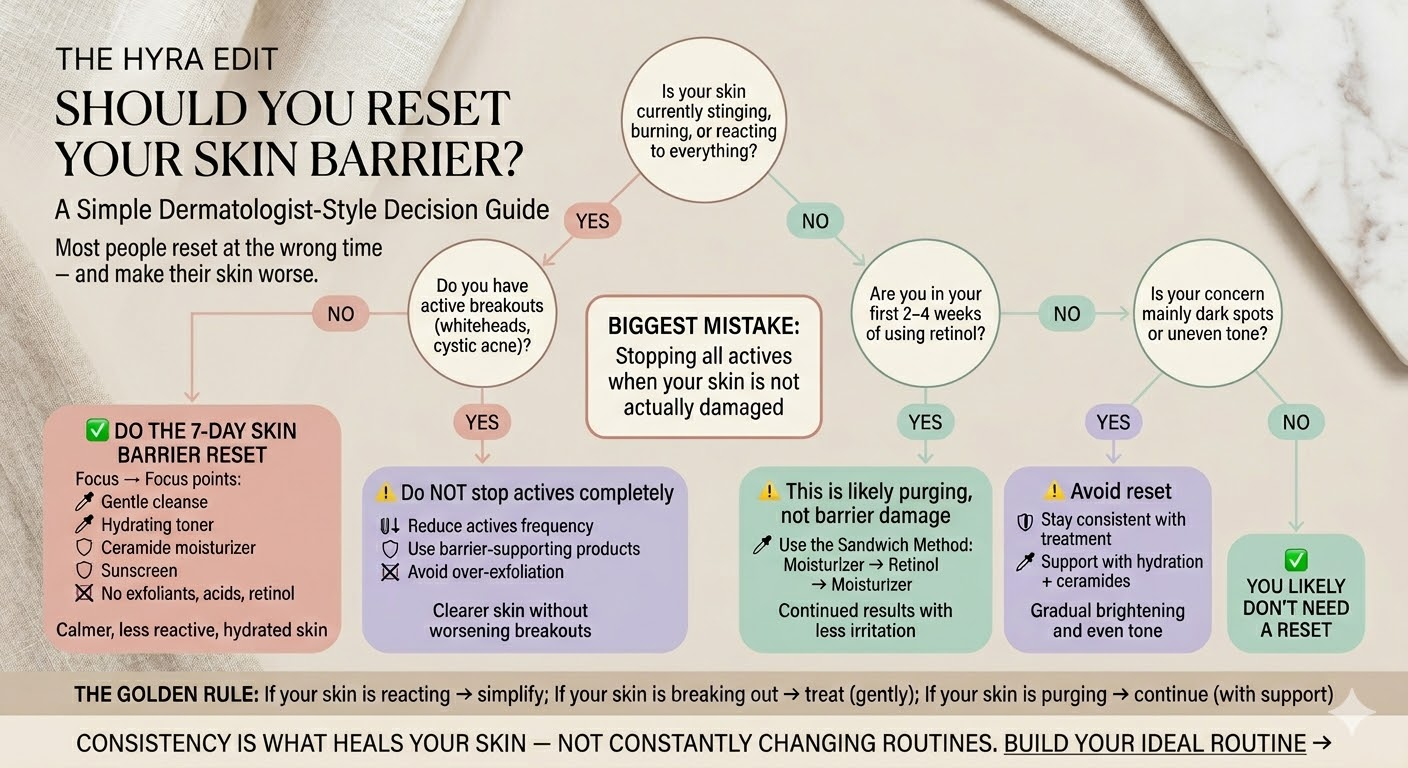
If you want an exact, day-by-day plan for your first week of repair, follow our 7-Day Skin Barrier Reset Plan →
It walks you through exactly what to use, when, and in what order — so you stop guessing and start healing.
👉 Full timeline breakdown: How Long Does It Take to Repair Your Skin Barrier?
Why Your Skin Barrier Isn't Healing
If your skin still feels tight, reactive, or irritated after a few weeks, the issue usually isn't time — it's your routine.
Using the wrong products (or too many actives) can keep your barrier in a constant state of damage.
Barrier repair requires:
- Consistent hydration
- Lipid replenishment (like ceramides)
- Minimal irritation
This is where a structured, barrier-first routine makes the difference between slow improvement and actual recovery.
👉 Shop the Ceramide Serum-In Cream → 👉 Read the Ceramide Guide →
The 4 Pillars of the Skin Barrier Blueprint
At its core, every effective routine comes down to four steps:
- Cleanse (low-pH, non-stripping)
- Hydrate (humectants)
- Repair (ceramides and lipids)
- Protect (daily SPF)
Everything else in skincare is optional. These four steps are not.
Build Your Barrier Repair Routine
Your skin doesn't need more products — it needs the right structure.
A simple barrier-first routine focuses on restoring lipids, calming inflammation, and preventing further damage.
Recommended Routine:
- Gentle cleanse (non-stripping)
- Ceramide-rich hydration
- Barrier-sealing moisturizer
- SPF (daily protection)
Shop the Routine:
- Ceramide Moisturizing Essence Toner
- Ceramide Moisturizing Serum-In Cream
- All Day UV Barrier Sunscreen
FAQ
What is the skin barrier blueprint?
A structured routine focused on cleansing, hydrating, repairing, and protecting the skin barrier.
Can I use retinol with a damaged barrier?
No — wait until your skin stabilizes.
How do I know my barrier is healing?
Reduced redness, less stinging, and improved comfort.
Do I need expensive skincare?
No — ingredient composition matters more than price.
Can oily skin mean barrier damage?
Yes — oil overproduction can result from dehydration.
Final Thought
Healthy skin doesn't come from doing more.
It comes from doing the right things consistently.
If your skin feels reactive, confused, or unstable: go back to the blueprint.
Shop the Barrier-First Routine
If your skin feels tight, sensitive, or unpredictable, your barrier is asking for simplicity — not more products.
A focused routine built around hydration, repair, and protection can help restore balance faster and prevent recurring irritation. Designed for dry, sensitive skin — especially in harsh climates like Canada.
Start with the essentials:
- Ceramide Moisturizing Essence Toner
- Ceramide Moisturizing Serum-In Cream
- All Day UV Barrier Sunscreen
Your skin doesn't need trends — it needs stability.






Leave a comment
This site is protected by hCaptcha and the hCaptcha Privacy Policy and Terms of Service apply.