
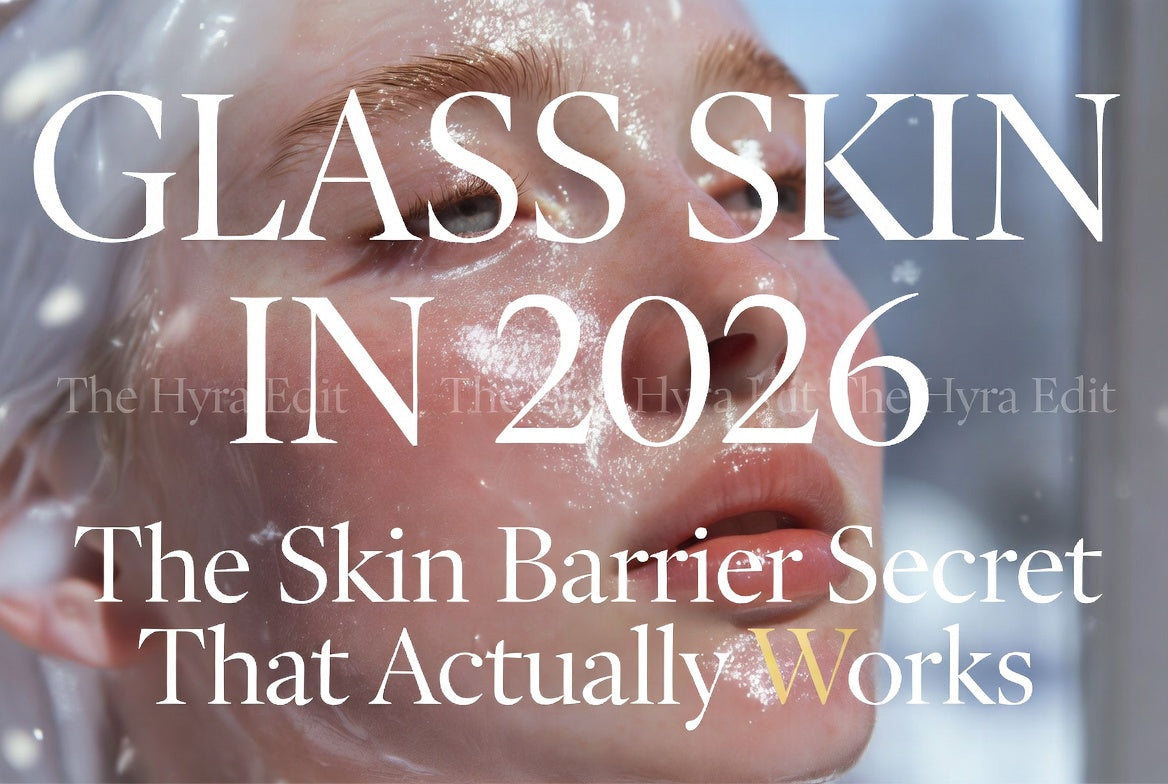
How to Get Real Glass Skin in 2026: Why a Strong Skin Barrier Is the Only Secret That Works for North American Winters
Forget the ten-step routines of the past. In 2026, the secret to "Glass Skin" isn't about layering on surface shine—it's about the molecular integrity of your skin barrier. This is Glass Skin 2.0.
✨ THE 2026 GLASS SKIN DEFINITION: "BLOOM SKIN"
In 2026, the trend has matured. We no longer chase "greasy" shine; we chase Bloom Skin—a naturally luminous, even-toned, bouncy complexion that comes from a healthy, intact skin barrier. If you live in North America, where freezing winds and dry indoor heat are constant, this guide is your definitive blueprint for skin resilience.
🔗 TABLE OF CONTENTS
- Glass Skin 2.0 vs. The Past
- The North American Climate: Calgary, Chicago & New York
- Common Signs Your Skin Barrier Is Damaged
- Why Most People Never Achieve Real Glass Skin
- The Science: The 3:1:1 Lipid Molar Ratio
- The Big Brand Comparison: CeraVe, Drunk Elephant & More
- The 5 Biggest Barrier Mistakes
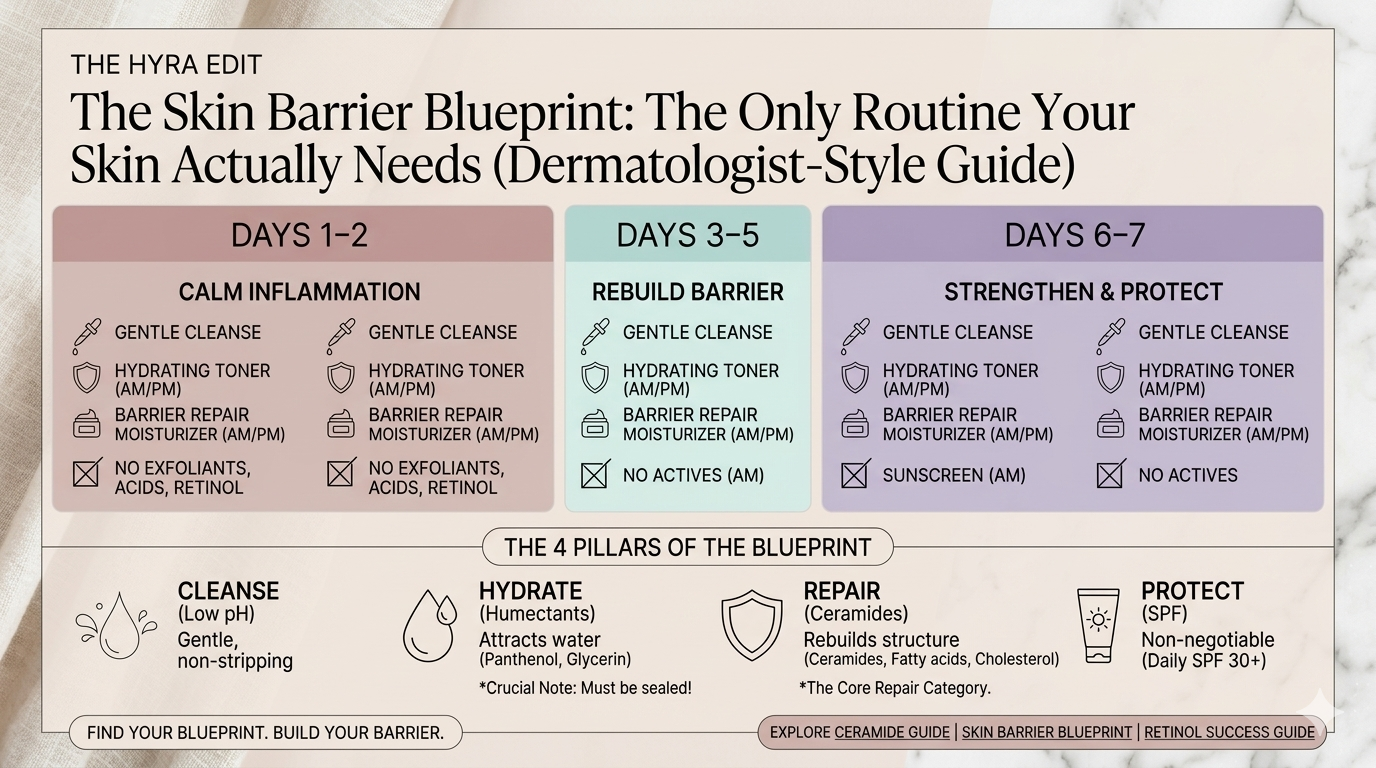
- The 5-Step Glass Skin Protocol
- The Glossary of Glow: Ingredient Deep-Dive
- 7-Day Glass Skin Starter Plan
- The Definitive FAQ
💎 GLASS SKIN 2.0: PHYSICS OVER MARKETING
In previous years, "Glass Skin" was achieved through heavy occlusives and snail mucin layering. While effective for some, it often felt "heavy" and didn't solve the underlying issue of barrier health. Glass Skin 2.0 is defined by Specular Reflection—a physics term for light bouncing off a perfectly smooth surface.
When your skin barrier is damaged, your skin cells (corneocytes) curl at the edges. Light hits these edges and scatters, making your skin look dull or "grey" regardless of how much oil you apply. When your barrier is repaired with lipids, those cells lie flat, creating a "mirror" effect. That is real glass skin—and it lasts because it's built on real barrier health.
🇨🇦 THE CLIMATE CHALLENGE: THE "HUMIDITY VACUUM"
If you live anywhere from Calgary to Toronto, Chicago to New York, your skin is under constant attack. Cold air holds far less moisture than warm air. When you move from -10°C prairie wind into a 22°C heated home, your skin undergoes "flash-dehydration" through Transepidermal Water Loss (TEWL) at an accelerated rate.
The Mayo Clinic highlights that these environmental shifts create micro-cracks in the stratum corneum. Without a specific lipid "sealant," hydration evaporates faster than you can replenish it. This is why many North Americans experience "Oily-Dehydrated" skin—the barrier is leaking water, so the skin over-produces sebum to try and compensate. A compromised barrier doesn't just feel uncomfortable—it blocks real glass skin. No matter how many hydrating serums you use, they can't stay put if the barrier is leaking.
🚫 COMMON SIGNS YOUR SKIN BARRIER IS DAMAGED
If you live in colder climates like Calgary, the Prairies, Toronto, Chicago, or New York, these symptoms are very common:
- Tightness After Cleansing: Your skin feels pulled tight or uncomfortable right after washing—even with a gentle cleanser.
- Flakiness or Rough Texture: Visible dry patches or skin that looks dull and uneven no matter what you apply.
- Redness or Stinging from Normal Products: Products that never bothered you before suddenly cause burning or irritation.
- Dullness That Moisturizer Can't Fix: You layer on cream but the skin still looks flat and lacks healthy bounce and glow.
- Increased Sensitivity: Skin reacts more easily to weather changes, makeup, or your usual routine.
- Slow Healing or Unexpected Breakouts: Minor irritation takes longer to calm, or you notice more random breakouts.
The good news? A consistent ceramide-focused routine can start reversing these signs in as little as 7–14 days.
❌ WHY MOST PEOPLE NEVER ACHIEVE REAL GLASS SKIN
- Over-exfoliation and harsh actives break down the barrier faster than it can repair, leading to inflammation and that "tight but shiny" look that isn't true glow.
- Skipping ceramides means there's no structural support—hydration sits on the surface and evaporates quickly.
- Using heavy creams that don't absorb well in dry indoor heating often leaves skin feeling greasy without delivering lasting plumpness.
🔬 THE CLINICAL CORE: THE 3:1:1 LIPID RATIO
Your skin barrier is like the "grout" between bricks, a concept widely supported by the Cleveland Clinic. But the mortar isn't just one ingredient—it is a precise biological blend. Pioneers in barrier research like Dr. Peter Elias have proven that the barrier only repairs itself effectively when lipids are applied in a specific 3:1:1 Molar Ratio:
- Ceramides (~50%): The structural foundation—the "mortar" holding skin cells together.
- Cholesterol (~25%): Provides the fluidity needed for the barrier to bend without cracking.
- Fatty Acids (~15%): Stabilizes the pH and keeps the Acid Mantle intact.
Cleveland Clinic explains ceramides act as the "grout" that keeps everything sealed. Mayo Clinic highlights ceramides, fatty acids, and glycerin as key for repairing dry, compromised skin. And Allure's 2026 skincare trends name ceramide-rich formulas as the non-negotiable step for anyone chasing real glow.
Most mass-market creams focus only on ceramides. The V'anhalla Ceramide Serum-in-Cream uses biomimetic lipids to mirror this exact 3:1:1 ratio, allowing the formula to integrate into your skin rather than just sitting on top of it.

⚖️ THE COMPARISON: HYRA EDIT VS. GLOBAL GIANTS
Not all ceramide products are created equal. As Allure's 2026 trends highlight, the formula matters as much as the ingredient. Here is how the market leaders compare to the V'anhalla philosophy:
| Product | Lipid Profile | Texture | Best For | Approx. Price |
|---|---|---|---|---|
| CeraVe Moisturizing Cream | 3 Essential Ceramides | Thick/Occlusive | Basic, budget repair | $15–$25 |
| Drunk Elephant Protini | Peptides & Growth Factors | Gel-Cream | Firming/Anti-Aging | $60–$70 |
| La Roche-Posay Toleriane | Ceramides + Prebiotics | Light Cream | Sensitive/Reactive skin | $25–$40 |
| Paula's Choice Omega+ Complex | Fatty Acids + Ceramides | Lotion | Dehydrated, thinning skin | $49–$55 |
| V'anhalla Serum-in-Cream | Clinical 3:1:1 Ratio | Lightweight/Fast | 2026 Glass Skin Glow | $26–$35 |
❌ THE 5 BIGGEST BARRIER MISTAKES
- Over-Cleansing: If your skin feels "squeaky clean," you've stripped your natural lipids. Squeaky clean skin is damaged skin.
- Applying on Dry Skin: Moisturizer seals; toners hydrate. Always apply on damp skin or you're sealing a dry surface.
- Actives Overload: Using Retinol and Vitamin C on a broken barrier leads to inflammation and "Post-Inflammatory Dullness."
- The Car Defrost Effect: High-velocity dry air in your car "flash-dries" your barrier every single morning for 4–6 months of the year in cold climates.
- Ignoring Indoor Humidity: If indoor humidity drops below 20%, your skin becomes a water source for the air—no moisturizer can compensate.
🛠️ THE 5-STEP GLASS SKIN PROTOCOL
Morning Routine
- Low-pH Cleanse: Use V'anhalla Deep Cleansing Balm to remove SPF without dissolving your "mortar."
- Molecular Hydration: Pat V'anhalla Essence-in-Toner on damp skin. This is your "water" step.
- The 3:1:1 Seal: Apply Serum-in-Cream. This delivers the lipids directly into the gaps of your barrier.
- Targeted Repair: If skin is dull, add a cluster-focused treatment. Learn why skin looks dull even after moisturizing →
- UV Shield: UV damage is the #1 cause of lipid peroxidation—literally spoiling your natural oils. Never skip SPF.
Night Routine
- Gentle cleanse
- V'anhalla Essence-in-Toner
- V'anhalla Ceramide Serum-in-Cream (locks in moisture overnight for accelerated repair)
🌸 THE GLOSSARY OF GLOW (SUPPORTING INGREDIENTS)
Beyond the 3:1:1 ratio, your barrier needs a supporting cast to thrive:
- Panthenol (Pro-Vitamin B5): A deep humectant that soothes the "fire" of inflammation and penetrates deeper than surface-level hydrators.
- Centella Asiatica (Cica): Provides the "blueprints" for your skin to stimulate its own internal ceramide production.
- Madecassoside: A compound found in Cica that specifically targets roughness by accelerating the healing of micro-cracks.
- Niacinamide: Helps the skin synthesize its own natural lipids while evening out tone and reducing post-inflammatory dullness.
📅 7-DAY GLASS SKIN STARTER PLAN
- Days 1–3: Pure Repair Mode. Cleanse, Toner, and Serum-in-Cream only. Eliminate all actives (Retinol, Vitamin C, AHAs).
- Days 4–6: You will notice reduced "tightness" in the mornings. This is the 3:1:1 ratio filling the micro-cracks in your barrier.
- Day 7: Visible "Bloom Skin" begins. Your surface is flat enough to reflect light evenly—real glass skin.

❓ THE DEFINITIVE FAQ
How long until I see real glass skin results?
Many notice less tightness and more bounce within 7–14 days of consistent ceramide use. Fuller luminous glow and smoother texture typically appear in 3–4 weeks.
Is "Glass Skin" possible for oily skin?
Absolutely. Oily skin is often dehydrated skin in disguise. When you fix the barrier, your skin stops over-producing oil, leading to a "balanced" glow rather than a greasy shine.
Is this routine suitable for sensitive or reactive skin?
Yes—ceramides are naturally soothing and non-irritating. The V'anhalla formulas are especially gentle and designed for barrier repair, making them ideal if your skin feels easily flushed or tight.
Can I use this routine with retinol, acids, or other actives?
Yes—once your barrier feels stronger (usually after 1–2 weeks of ceramide focus). Start slow and use the Find Your Routine quiz to guide safe layering and avoid irritation.
What if I live in a super-dry climate like the Prairies or high altitudes?
Double down on the ceramide layers and run a humidifier. This routine is built for North American weather challenges—many customers in Calgary and similar areas see faster improvements with consistent use.
How long does shipping take to Canada and the USA?
Orders ship same-day from Calgary, AB and Salem, OH. Most customers in 🇨🇦 and 🇺🇸 receive their order in 2–4 business days via UPS or FedEx with no surprise duties or customs fees.
Will ceramides cause breakouts or feel heavy?
Ceramides are non-comedogenic and unlikely to cause breakouts. The V'anhalla Serum-in-Cream has a lightweight, fast-absorbing K-beauty texture that works well even for combination or oily skin types.
Are the products vegan and clean?
Yes—100% vegan, fragrance-free, UK cruelty-free certified, and formulated with K-beauty principles focused on barrier health.
📖 Go Deeper: Struggling with dullness even after moisturizing? Read our cluster guide: Why Your Skin Still Looks Dull Even After Moisturizing →
Build Your 2026 Routine
Shop the V'anhalla Barrier CollectionFind Your Routine: Take the 2-Min Skin Quiz →
© 2026 The Hyra Edit. Clinically-backed K-Beauty for the resilient skin barrier. CeraVe and Drunk Elephant are trademarks of their respective owners.





Leave a comment
This site is protected by hCaptcha and the hCaptcha Privacy Policy and Terms of Service apply.