
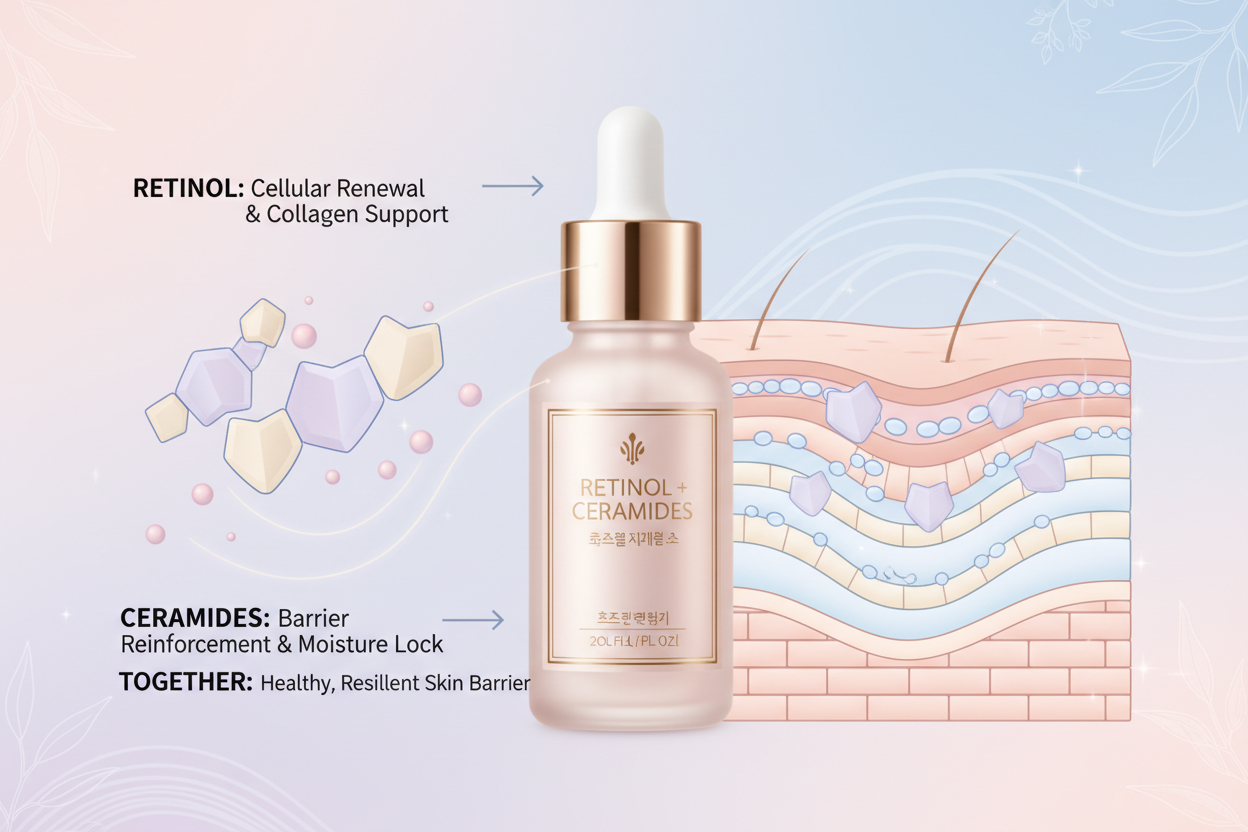
Can You Use Retinol With a Damaged Skin Barrier?
Quick Summary: Retinol & Barrier Safety
• Retinol should not be used on an actively damaged skin barrier
• Mildly compromised skin may tolerate buffered retinol
• Ceramides help strengthen the lipid barrier before actives
• Restart retinol slowly once irritation disappears
• Healthy barriers dramatically improve retinol results
If your moisturizer stings, your skin barrier likely needs repair before retinol.
Why Retinol and the Skin Barrier Are Closely Connected
Retinol is one of the most researched ingredients in skincare for improving fine lines, uneven tone, and texture. It works by accelerating skin cell turnover and stimulating collagen production.
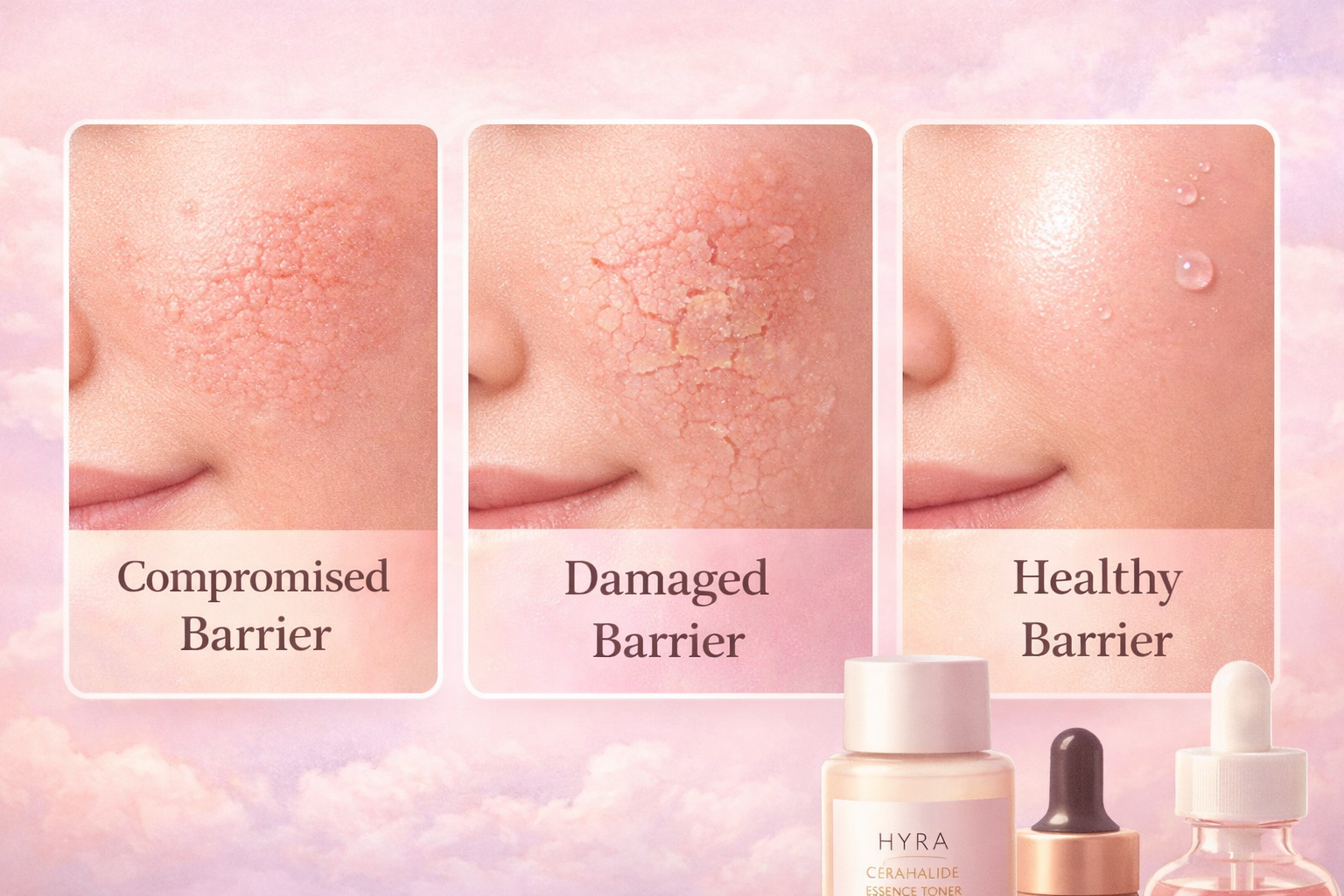
However, this renewal process can temporarily weaken the skin barrier — especially if the barrier is already compromised.
When the skin barrier is strong, retinol helps improve:
• Skin texture
• Elasticity
• Pigmentation
• Fine lines
But when the barrier is damaged, retinol can intensify:
• Redness
• Dryness
• Peeling
• Irritation
This is why barrier-first skincare is essential before introducing active ingredients.
Learn more in our guide explaining why your skin barrier determines retinol success.
What Happens If You Use Retinol on a Damaged Barrier?
A damaged skin barrier loses moisture rapidly due to increased transepidermal water loss (TEWL).
When this happens:
• Lipid levels decline
• Skin becomes inflamed
• Sensitivity increases
Applying retinol on already damaged skin can worsen irritation because the protective barrier structure is weakened.
Dermatology research confirms that barrier disruption increases sensitivity to active ingredients and environmental stressors.
American Academy of Dermatology explains the importance of maintaining a healthy skin barrier.
When Should You Pause Retinol?
You should temporarily stop retinol if you notice:
• Burning sensation
• Persistent redness
• Flaking or peeling
• Stinging when applying moisturizer
• Increased sensitivity
These signs often indicate barrier damage.
If this sounds familiar, follow a structured recovery routine explained in our complete guide to repairing a damaged skin barrier.
Can You Ever Use Retinol With a Compromised Barrier?
Sometimes yes — but cautiously.
If your skin is only mildly compromised (slight dryness or occasional sensitivity), a buffered retinol approach can reduce irritation.
Buffered method:
1. Apply ceramide toner
2. Apply moisturizer
3. Apply a small amount of retinol
This technique slows absorption and protects the barrier.
Balanced formulations like V'anhalla Retinol 3R Serum combine pure retinol with 2% Bakuchiol and peptides, helping support gradual skin renewal with less irritation.
Why Ceramides Are Essential When Using Retinol
Ceramides are lipids naturally present in the skin barrier that help seal moisture and maintain structural integrity.
Without adequate ceramides:
• Moisture escapes faster
• Sensitivity increases
• Retinol irritation becomes more likely
Barrier-supporting products like V'anhalla Ceramide Essence Toner help replenish the lipid structure and reduce TEWL.
For a deeper comparison between these ingredients, see our guide on ceramides vs retinol for barrier repair.
How to Restart Retinol After Barrier Damage
If your skin barrier was recently damaged, allow it to recover fully before restarting retinol.
Suggested timeline:
Week 1–2
Barrier repair only — gentle cleanser, ceramide toner, moisturizer, sunscreen.
Week 3
Introduce retinol once weekly.
Week 4
Increase to twice weekly if no irritation occurs.
Always apply retinol on dry skin, because damp skin increases absorption and irritation risk.
Personalized Skincare Matters
Barrier health depends on:
• Skin type
• Climate
• Product selection
• Lifestyle habits
If you are unsure which products are best for your skin, try our Korean Skincare Quiz to discover a personalized routine designed for barrier support.
Why Korean Skincare Emphasizes Barrier Protection
Korean skincare philosophy prioritizes long-term skin health rather than aggressive treatments.
When the barrier is strong:
• Retinol works more effectively
• Hydration improves
• Sensitivity decreases
• Skin becomes more resilient
At The Hyra Edit (formerly Hyra Beauty), we curate Korean skincare products designed to support skin resilience and barrier repair.
Final Thoughts
Retinol can be transformative — but only when your skin barrier is ready.
Treating skin before stabilizing the barrier often leads to irritation rather than improvement.
By strengthening the barrier first with ceramides, hydration, and gentle routines, retinol can deliver its full benefits safely.
Healthy skin always starts with a strong barrier.





Leave a comment
This site is protected by hCaptcha and the hCaptcha Privacy Policy and Terms of Service apply.