
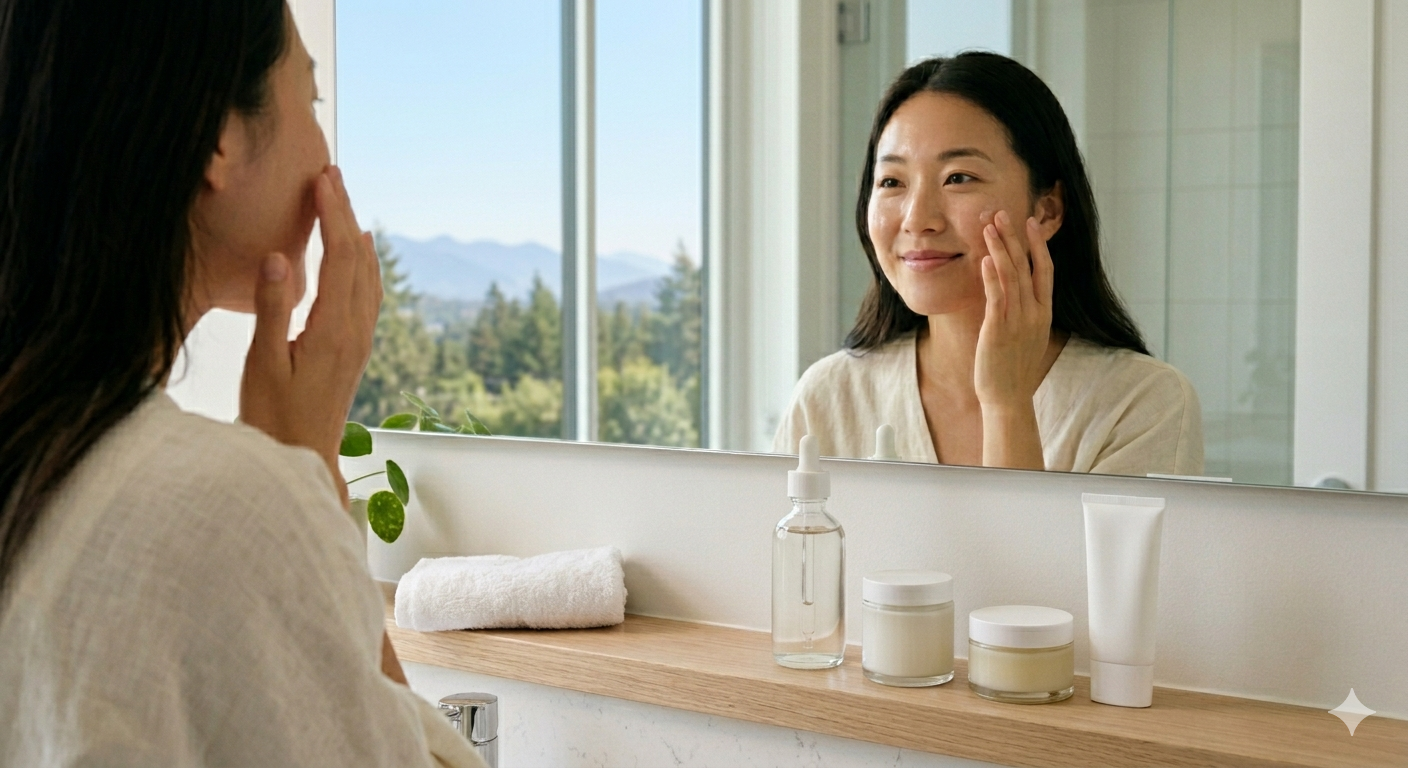
Why Your Skin Still Looks Dull Even After Moisturizing (And What Actually Fixes It)
✨ QUICK SUMMARY: WHY YOUR SKIN STILL LOOKS DULL
- Moisturizer alone does NOT hydrate your skin.
- Dullness is caused by dehydration + a weakened skin barrier.
- If glow disappears quickly → your skin cannot retain water.
- The 3:1:1 Lipid Ratio (Ceramides, Cholesterol, Fatty Acids) rebuilds your structure.
- Over-cleansing and actives are the #1 hidden causes.
- Most people see visible improvement in 2–4 weeks.
🔗 JUMP TO
- The Physics of Glow
- The Moisturizer Paradox
- The Biochemistry of the "Leaky" Barrier
- The Climate Factor: Calgary, Winnipeg & Chicago
- Winter vs. Summer: Seasonal Barrier Threats
- The 5 Biggest Mistakes
- The Bloom Skin Protocol
- The Glossary of Glow (Ingredients)
- FAQs

🧠 THE PHYSICS OF GLOW: WHY SKIN LOOKS DULL
Glow isn't just cosmetic—it's physical. In clinical skincare, radiance is defined by specular reflection. While Allure and Byrdie have long championed the "Glass Skin" ideal, achieving that luminosity isn't just about high-shine highlighters—it starts with what dermatologists call "epidermal integrity."
Healthy skin reflects light evenly (like a mirror). When your barrier is smooth and the surface cells (corneocytes) lie flat, light hits the skin and bounces back uniformly. This creates that sought-after "lit-from-within" look.
Damaged skin scatters light (like rough glass). When your barrier is compromised, skin cells curl at the edges instead of lying flat. Light hits these jagged edges and scatters in multiple directions. This is why skin looks "flat" or "grey" regardless of how much oil you apply. To fix dullness, we must fix the surface architecture.
🧴 THE MOISTURIZER PARADOX
You apply moisturizer. Skin feels soft. Within hours, the dullness returns.
Why?
Because moisturizers are often Occlusives. They are designed to lock in what is already there. If your skin is already dehydrated (lacking water in the deeper layers), a moisturizer just "seals in the dryness." Furthermore, if your barrier is physically broken, the moisturizer acts like a tarp over a leaky roof—it's a temporary fix for a structural problem.
According to Allure, ceramides help fill gaps between skin cells, allowing skin to retain moisture properly rather than just sitting on top of the damage.
🔬 THE BIOCHEMISTRY OF THE "LEAKY" BARRIER
Your skin barrier isn't just a shield; it's an organized lamellar structure. In a healthy barrier, lipids are arranged in tight, waterproof layers.
The "Hole in the Bucket" Effect
Think of your skin like a bucket. Humectants (toners) fill the bucket with water, but if your lamellar structure is disorganized, the bucket has thousands of microscopic holes. This is Transepidermal Water Loss (TEWL).
The 3:1:1 Lipid Concept
Clinical research shows your barrier requires a specific ratio of lipids to function:
- Ceramides (~50%): The "mortar" holding skin cells together.
- Cholesterol (~25%): Provides fluidity and repair signals.
- Fatty Acids (~15%): Maintains the Acid Mantle (pH balance).
When you use the V'anhalla Ceramide Serum-in-Cream, you are topically applying this exact ratio. Most mass-market creams use petrolatum to "plug" holes; our formula uses biomimetic lipids that integrate into your skin's own structure to fix the "leaks" permanently.
🇨🇦 THE CLIMATE FACTOR: CALGARY, WINNIPEG & CHICAGO
If you live in a high-latitude or high-altitude city, your environment is working against your skin every single day. Cities like Calgary, AB, Winnipeg, MB, and Chicago, IL share a brutal combination of climate stressors that accelerate barrier breakdown through what we call the "Humidity Vacuum" effect.
🏙️ Calgary, AB
Calgary sits at over 1,000 metres above sea level, making it one of the driest major cities in Canada. The infamous Chinook winds cause rapid temperature swings—sometimes 20°C in a single day—which forces your barrier to constantly contract and expand, weakening its lipid structure over time. Add forced-air heating indoors and UV intensity amplified by altitude, and you have a perfect storm for chronic dullness.
🇬🇧 Winnipeg, MB
Winnipeg is one of the coldest cities in North America by average winter temperature, with humidity levels that can drop below 10% indoors during peak heating season. At these levels, your skin's natural moisture evaporates faster than any moisturizer can replenish it. TEWL rates in Winnipeg winters are among the highest recorded for urban environments in Canada. If your skin feels perpetually tight and dull despite a full routine, this is why.
🇺🇸 Chicago, IL
Chicago's nickname isn't "The Windy City" for nothing. High-velocity lakefront winds strip the skin's surface moisture in minutes—a phenomenon dermatologists call "convective drying." Combined with the city's dramatic seasonal swings (humid summers, brutally dry winters), Chicago skin faces a year-round barrier challenge that most mainstream skincare brands simply aren't formulated to address.
The Three Shared "Humidity Vacuums"
- Forced Air Heating: Modern furnaces strip moisture from indoor air, creating a sponge-like environment that pulls water directly from your skin.
- The "Car Defrost" Effect: High-velocity dry air directed at the face while driving "flash-dries" the skin barrier—a daily ritual in all three cities for 4–6 months of the year.
- The Altitude & Wind Variable: Thinner air and high winds accelerate TEWL and cause lipid peroxidation—literally "spoiling" your skin's natural oils before they can do their job.
The Fix: Apply your V'anhalla Essence-in-Toner on damp skin immediately after cleansing. This creates a hydration seal before the dry air can steal your moisture.
🌡️ WINTER VS. SUMMER: SEASONAL BARRIER THREATS
Your barrier doesn't face the same enemy year-round. The threats shift with the seasons—and so should your routine.
❄️ Winter: The Dehydration Season
Winter is the most damaging season for your skin barrier in cold-climate cities. The combination of freezing outdoor air (which holds almost no moisture) and overheated indoor environments creates a relentless cycle of dehydration. Key threats include:
- Indoor humidity below 20%: At this level, your skin loses water to the air rather than absorbing it. No amount of moisturizer compensates without a functioning barrier.
- Hot showers: A winter comfort habit that dissolves the lipid "mortar" between your skin cells, dramatically increasing TEWL.
- Wind chill: Accelerates surface moisture loss and causes micro-cracking in the outermost skin layer (stratum corneum).
- Vitamin D deficiency: Reduced sun exposure in winter correlates with slower skin cell turnover, contributing to the "grey" dull appearance.
Winter Protocol Adjustment: Double-layer your hydration—apply the V'anhalla Essence-in-Toner twice (the "7-Skin Method") before sealing with the Serum-in-Cream. Add a humidifier to your bedroom to keep indoor humidity above 40%.
☀️ Summer: The Oxidative Stress Season
Summer brings a different set of barrier threats that are just as damaging—but easier to overlook because skin feels less "tight." Key threats include:
- UV-induced lipid peroxidation: Summer UV radiation literally oxidizes ("spoils") your skin's ceramides and fatty acids. This is the #1 cause of summer dullness—your barrier lipids are being destroyed faster than your skin can replace them.
- Air conditioning: Just like winter heating, AC strips indoor humidity and creates the same dehydrating environment—without the cold temperature cue that reminds you to moisturize.
- Over-cleansing from sweat: Washing your face more frequently in summer strips lipids repeatedly throughout the day.
- Humidity paradox: High outdoor humidity can make skin feel hydrated on the surface while the barrier remains compromised underneath—masking the problem until fall, when dullness suddenly "appears."
Summer Protocol Adjustment: Prioritize SPF as your #1 barrier tool—UV damage is the leading cause of ceramide breakdown. Switch to a lighter application of the Serum-in-Cream and focus on antioxidant-rich ingredients like Niacinamide to neutralize oxidative stress before it damages your lipid layers.
❌ THE 5 BIGGEST ROUTINE MISTAKES
- Over-cleansing: If your skin feels "squeaky clean," you've stripped your lipids. Use the V'anhalla Deep Cleansing Balm to protect the barrier.
- Over-exfoliating: We often see "barrier burnout" from the over-enthusiastic use of potent actives. If you are currently using a high-strength L-Ascorbic Acid like SkinCeuticals C E Ferulic or a powerful resurfacer like Drunk Elephant's TLC Sukari Babyfacial, your skin requires a "buffer." Without a dedicated K-Beauty barrier cream, these gold-standard treatments can lead to the very dullness you're trying to fix.
- Skipping the Toner: Moisturizer seals; toners hydrate. If you skip Step 2, you are sealing a dry surface.
- Using Actives Too Early: Retinol and Vitamin C on a broken barrier cause inflammation, which leads to post-inflammatory dullness.
- Changing Routines Weekly: Barrier repair takes a full skin cycle (28 days). Instability prevents healing.
🛠️ THE EXACT FIX: THE BLOOM SKIN PROTOCOL
Step 1 — Cleanse Without Stripping
Use a lipid-replenishing balm to remove SPF and pollutants without dissolving your "mortar."
Step 2 — Add Hydration (CRITICAL)
Apply V'anhalla Ceramide Moisturizing Essence-in-Toner on damp skin. This supplies the water your cells are craving.
Step 3 — Repair the Structure
Apply the V'anhalla Ceramide Moisturizing Serum-in-Cream. This delivers the 3:1:1 lipid ratio directly into the gaps of your barrier.
Step 4 — Protect
Daily SPF is non-negotiable. UV damage breaks down ceramides. Protect your investment with a barrier-safe sunscreen.
🌸 THE GLOSSARY OF GLOW (SUPPORTING INGREDIENTS)
Beyond ceramides, your barrier needs a supporting cast to thrive. In the world of luxury K-Beauty, heritage brands like Sulwhasoo have spent decades proving the efficacy of fermented herbs and Ginseng—healing skin from the inside out. This same philosophy is why we prioritize these clinically-backed ingredients in our repair routines:
- Panthenol (Pro-Vitamin B5): A deep humectant that penetrates deeper to soothe the "fire" of inflammation.
- Centella Asiatica (Cica): Provides the "blueprints" for your skin to stimulate its own internal ceramide production.
- Madecassoside: A compound found in Cica that specifically targets roughness by accelerating the healing of micro-cracks.
- Niacinamide: Helps the skin synthesize its own natural lipids while evening out the tone.
❓ FAQs
Why does my skin look dull even after moisturizing?
Because the water is evaporating through "cracks" in your lipid barrier (TEWL). You need ceramides to seal the leaks.
How long does it take to fix dull skin?
Most people see a shift in comfort within 3 days and a visible return of glow within 2–4 weeks.
Can oily skin be dull?
Yes. Oil and hydration are different. Oily-dehydrated skin looks "shiny but tired." The solution is better hydration + barrier balance, not more oil control.
Do you ship quickly to Canada and the USA?
Yes. We ship locally from Calgary, AB and Salem, OH. Orders typically arrive within 2–4 business days, so your repair routine isn't interrupted.
🧠 FINAL TAKEAWAY
Radiance isn't something you buy; it's something you build. By shifting your focus from "adding shine" to "repairing structure," you move from a temporary Glass Skin look to the permanent health of Bloom Skin. As editors at Refinery29 often point out, the "less is more" approach to skincare—or "Skin Streaming"—is the most effective way to restore a compromised glow. Our Bloom Skin Protocol follows this exact expert-vetted logic.
📖 Deep Dive: Want the full technical breakdown of the 3:1:1 lipid ratio? Read our flagship guide: How to Get Real Glass Skin in 2026: The Skin Barrier Secret →
👉 Build Your Routine: Shop the Collection
👉 Take the Skin Barrier Quiz
© 2026 The Hyra Edit. Clinically-backed K-Beauty for the resilient skin barrier.






Leave a comment
This site is protected by hCaptcha and the hCaptcha Privacy Policy and Terms of Service apply.