

How to Protect Your Skin Barrier From Environmental Stress (2026 Guide)
Quick Summary: Barrier Protection That Actually Works
- Sun, pollution, cold air, and indoor heating increase transepidermal water loss (TEWL), weakening your skin's lipid barrier.
- Barrier support with ceramides strengthens hydration and defends against environmental triggers.
- Pair actives like retinol with barrier-friendly ingredients and Bakuchiol for gentler results.
- Always hydrate before using retinol and seal with a moisture-rich cream.
- Seasonal adjustments (winter vs summer) make a big difference in barrier resilience.
- Smart layering + consistent barrier care = long-term healthy, calm skin.
Introduction
Your skin is constantly under attack — not just from harsh actives, but from everyday environmental stress:
- ☀️ UV rays
- 🌫️ Urban pollution
- 🍃 Dry winter winds
- 🔥 Indoor heating
These conditions disrupt your lipid barrier, raise transepidermal water loss (TEWL), and accelerate irritation. If you've ever wondered why your skincare works sometimes, but not in certain weather or cities, this is why.
At The Hyra Edit (formerly Hyra Beauty), we teach a barrier-first philosophy — not just reacting to damage, but preventing it.
Let's break down how environment affects your skin and how you can protect it intelligently.
How Environmental Stress Damages Your Skin Barrier
Exposure to UV, pollution particles, and dry air weakens the barrier by stripping away lipids like ceramides, fatty acids, and cholesterol — the natural "mortar" holding your skin together.
According to the American Academy of Dermatology, UV and environmental stress increase inflammation and impair barrier function, making skin more sensitive and reactive.
This results in:
- Increased water loss
- Redness and micro-irritation
- Reduced ability to tolerate actives
- Faster breakdown under stress
The Smart Barrier-First Layering Method
Step 1: Hydration First
Start with a ceramide-rich toner. Hydrating toners help counteract TEWL and prepare skin for actives.
👉 Example: Vanhalla Ceramide Essence Toner
Step 2: Controlled Actives — Retinol + Bakuchiol
Retinol accelerates renewal, but it also temporarily increases permeability — meaning TEWL can rise if the barrier isn't supported.
If you're navigating high-stress environments like pollution-heavy cities or harsh winters, Bakuchiol is your best friend — it gives many of retinol's benefits with lower irritation risk during the day.
Use your night retinol like:
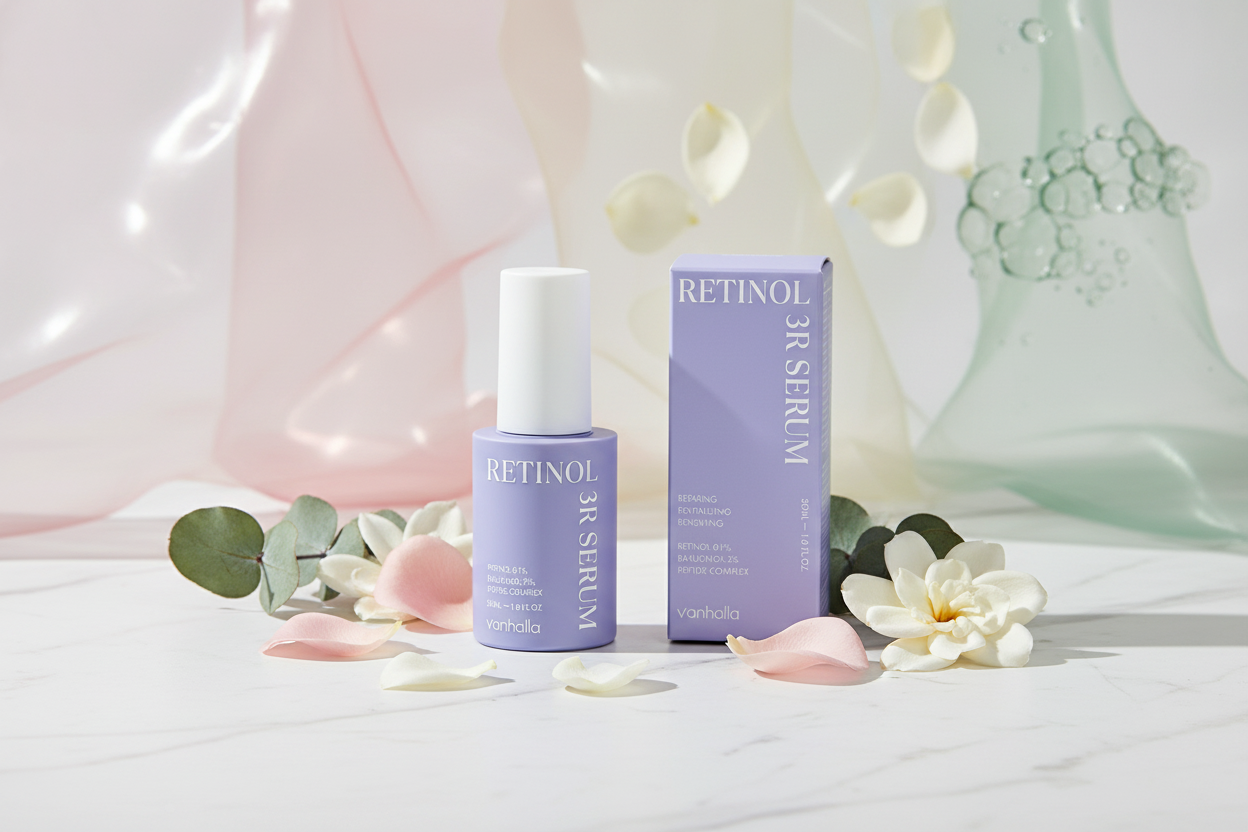
👉 Vanhalla Retinol 3R Treatment
Apply after hydration layers and always seal afterwards.
Step 3: Seal and Protect
Finish with a barrier-strengthening moisturizer. This locks in hydration and further reinforces the lipid structure so stressors have less impact.
For daytime: add SPF50+ PA++++ to block UV, which is one of the largest environmental stressors globally.
Seasonal Barrier Protection Tips
- ✔ Winter: Use richer ceramides and occlusive creams to combat dry air and indoor heating.
- ✔ Summer: Focus on lighter hydration + SPF and pollution defense.
- ✔ Pollution Climates: Boost with antioxidant-rich boosters in addition to ceramides.
- ✔ Travel/Flights: Cabin air is extremely drying — double hydration and barrier seal steps.
Why This Barrier-First Philosophy Works
When your barrier is strong:
- Actives like retinol and Bakuchiol work without irritation
- Skin retains hydration much longer
- Redness decreases and sensitivity drops
- Daily stress doesn't trigger reactivity
You're not just reacting to environmental stress — you're preventing it.
At The Hyra Edit, we curate formulas that support long-term resilience rather than short-term intensity. That's how healthy skin truly glows.
As explained in Allure's dermatologist breakdown of ceramides, these lipids are essential for restoring barrier integrity after active treatments and environmental exposure.
Conclusion
Environmental stress doesn't need to be your enemy.
With hydration, intelligent layering, and barrier support, your skin becomes more resilient — not reactive.
Whether you're in cold Canadian winters or busy urban centres, this barrier-first method protects you every day.
Related Reading:




,%20weakening%20your%20skin's%20lipid%20barrier.%0ABarrier%20support%20w...)
Leave a comment
This site is protected by hCaptcha and the hCaptcha Privacy Policy and Terms of Service apply.